More reporting
Increase in near-miss reporting volume.
What enabled itMobile capture and simplified reporting
CASE STUDY / AUTOMOTIVE COMPONENTS
An automotive component manufacturer replaced manual near-miss reporting, siloed observations, and inconsistent audit closure tracking with mobile capture, enterprise safety alerts, and centralised governance.
Client highlights
Incident Management, Walkthrough Inspection, Enterprise Safety Alerts
Near-miss culture, cross-plant learning and consistent closure
Higher near-miss volume, lower incident rate, fewer repeats
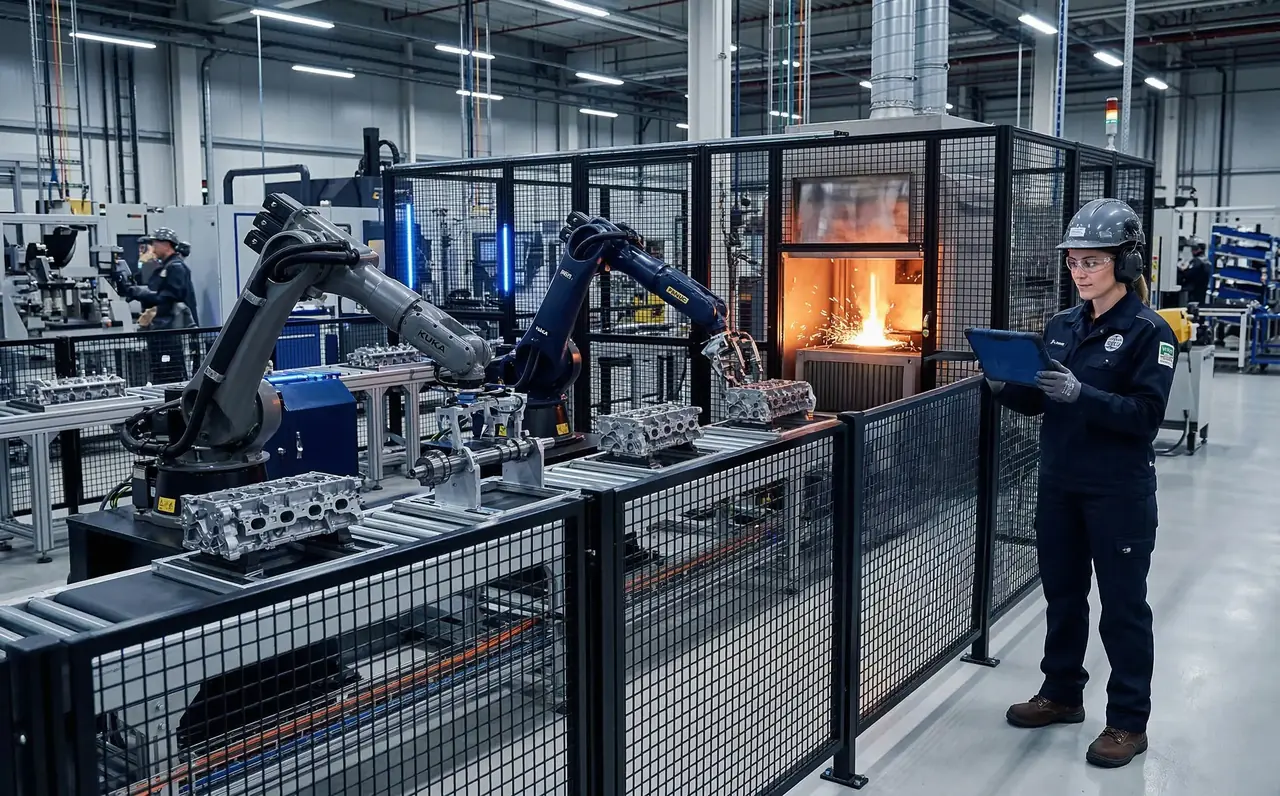
The shift from a weak near-miss culture to more signals, faster action and fewer repeats.
Increase in near-miss reporting volume.
What enabled itMobile capture and simplified reporting
Reduction in recordable incident rate.
What enabled itMore signals and faster action closure
Faster incident investigation completion time.
What enabled itStructured investigations and linked actions
Reduction in repeat equipment-related safety incidents.
What enabled itEnterprise alerts and repeat-theme tracking
WORKFLOW AT A GLANCE
A near-miss or behaviour observation is captured on mobile at the point of work.
Explore this solutionEHS validates severity and assigns ownership based on zone and category rules.
Explore this solutionThe owner closes the action with evidence; safety alerts are broadcast where the same risk exists.
Explore this solutionInvestigation and CAPA complete with verification before final closure.
Explore this solutionDashboards track near-miss volume, investigation speed, audit score and repeats across plants.
Explore this solutionWhy signals from the floor weren’t reaching the people who could act.
Reporting friction meant fewer signals from the floor.
Behaviour observations were captured but not used to drive action consistently.
Alerts and lessons didn’t travel reliably between locations.
Audit findings tracked locally made closure discipline uneven.
Deploying a standardised, integrated safety environment across all active operational sites.
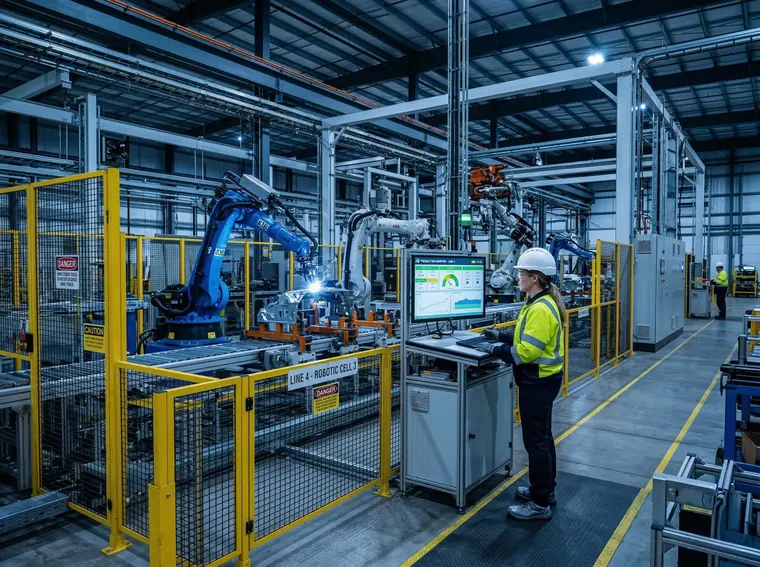
Configured for more signals from the floor, captured fast and routed correctly.
Key workflow controls
Audit proof captured
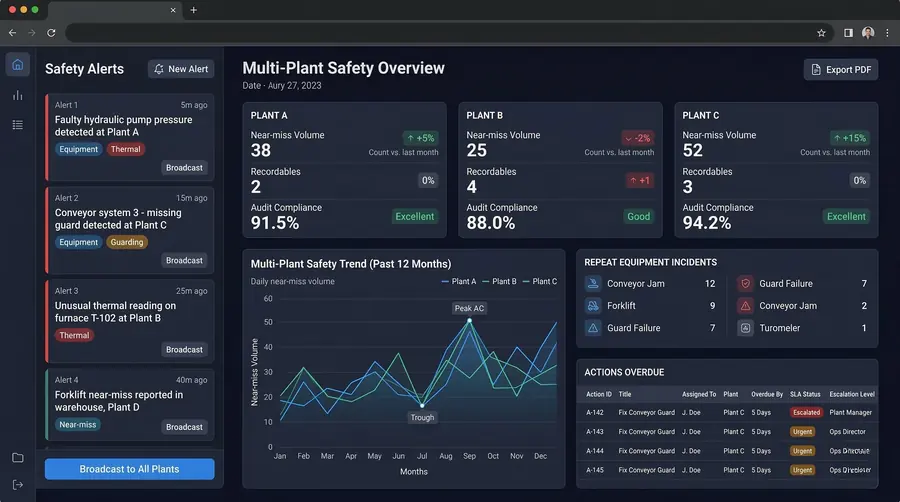
Configured for cross-plant learning and consistent closure discipline.
Key workflow controls
Audit proof captured
Less chasing. More traceability.
Fine-grained permissions by site, role or module.
Full history of all data changes and access.
One-click audit pack exports for regulators.
Capture keeps working in low-signal areas, then syncs when the device reconnects.
What the safety team started with, what changed, and what improved.
Context & constraints
Download the one-pager summary, or request a security brief for your IT review.
Most teams ask these questions before rolling out OQSHA.
Typically 2–6 weeks, depending on the number of sites, the modules you enable (Permit to Work, Inspections, Safety Alerts, HIRA, Visitor Management), and how much historical data you're bringing over. Most customers start with a pilot site, then roll out site by site.
Nothing special. Field teams use the OQSHA mobile app on Android or iOS phones and tablets; admins and managers use the web portal in any modern browser.
Yes. OQSHA is built for sites where connectivity is patchy: basements, towers under construction, plant floors. Field users can raise permits, safety alerts and inspections with no signal, including photos and attachments. Everything syncs automatically once the device reconnects.
Data is encrypted in transit and at rest, hosted on AWS in your chosen region. For organizations that need full control, OQSHA can also be deployed on-premise within your own infrastructure.
No. OQO runs as a captive AI. It works on your safety data within the OQSHA environment and never sends it to a public model or the open internet.
Yes. We support Single Sign-On and integration with common HRIS, ERP, and directory systems. Custom integrations are scoped with our implementation team during onboarding.
Yes. Historical permits, inspections, and incident records can be imported during onboarding, usually alongside the pilot, so your analytics and audit history are complete from day one.
Yes. Each organization runs in its own isolated tenant. Your templates, records, users, and dashboards are never visible to or shared with any other customer.
Built-in dashboards across permits, incidents, and inspections, filterable by site, zone, and time period. They're scoped automatically to what each user is allowed to see.
A named implementation contact through rollout, then standard support with response-time SLAs based on your plan. App updates are delivered over the air, so field users always have the latest version without reinstalling.
SAFER OPERATIONS START WITH A CONVERSATION
Your workflows. Your sites. A tailored OQSHA walkthrough.