Manual effort reduced
Standardised templates and a single action tracker replaced registers and spreadsheets.
CASE STUDIES
Across manufacturing, construction, food processing, and automotive plants, safety teams moved from paper and spreadsheets to connected workflows, reducing delays, improving reporting discipline, and making audit proof easy to pull.
The shift from reactive to proactive safety management, measured across every rollout.
Standardised templates and a single action tracker replaced registers and spreadsheets.
Mobile-first capture with guided fields removed the lag between event and record.
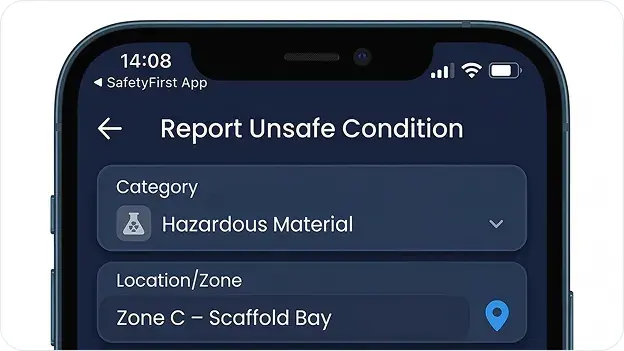
Low-friction reporting and clear routing brought more signals in from the floor.
Ownership, due dates and escalations kept audit actions closing on time.
ROLLOUT IN PHASES
Weeks 1–2. SOP mapping. Output: SOP map, roles and approval paths.
Explore this solutionWeeks 3–4. Workflow setup. Output: checklist library.
Explore this solutionWeeks 5–6. Single area. Output: user feedback.
Explore this solutionWeek 7. Site-wide. Output: live data stream.
Explore this solutionWeek 8. Optimisation. Output: audit baseline.
Explore this solutionBefore OQSHA, safety teams were running critical workflows across paper registers, spreadsheets, and personal chat threads, creating delays, missed follow-ups, and weak audit proof.
Approvals depended on chasing signatures and WhatsApp replies. “Work waited for sign-offs, not controls.”
Photos, logs, and documents sat in phones, email, or local folders. “Proof existed, but never in the record.”
Actions got assigned but weren’t tracked to closure across sites. “Deadlines moved, owners changed, closure didn’t happen.”
Audit prep meant collating data manually and reconciling missing trails. “Every audit became a last-minute scramble.”
Contractor competence checks were inconsistent at the point-of-work. “Hard to verify who is cleared to start.”
OQSHA was configured to match existing SOPs while digitising the governance layer, so every step is time-stamped, owned, and export-ready.
Control critical work with staged approvals and closure proof.
Report fast, investigate consistently, and close actions on time.
Make inspections repeatable and records retrievable.
Prove competence by role, site, and contractor group.
Get answers without manual reporting cycles.
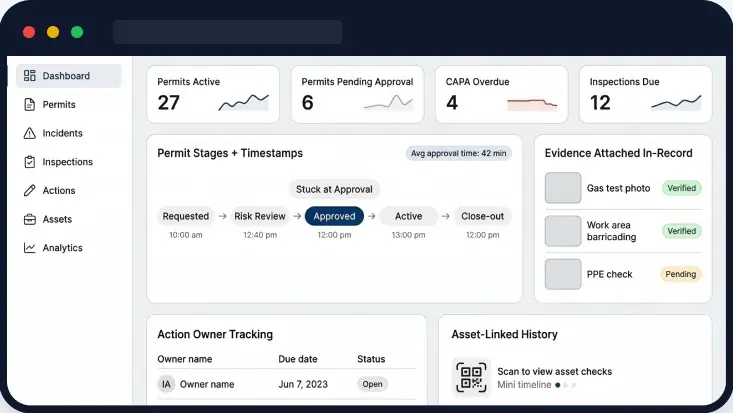
Visual proof, pulled from the record rather than rebuilt for the meeting.
Permit stages and timestamps, so no one guesses where a permit is stuck
Evidence attached in-record: photos of isolations and LOTO verified before start
Action owner tracking, with auto-escalations when a CAPA hits 24 hours past due
Asset-linked history: scan a QR to see the last five years of safety checks
Four organisations, four operating realities, one connected safety record.
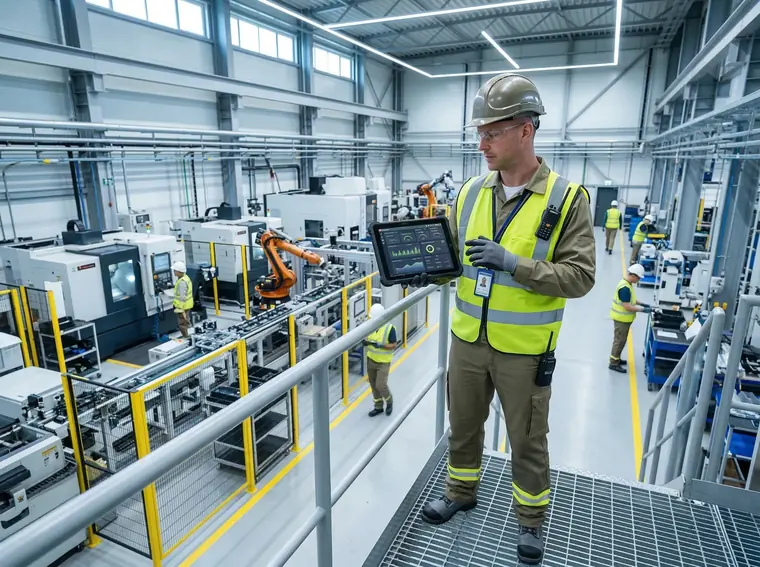
Near-miss reporting increased and audit closure improved across plants.
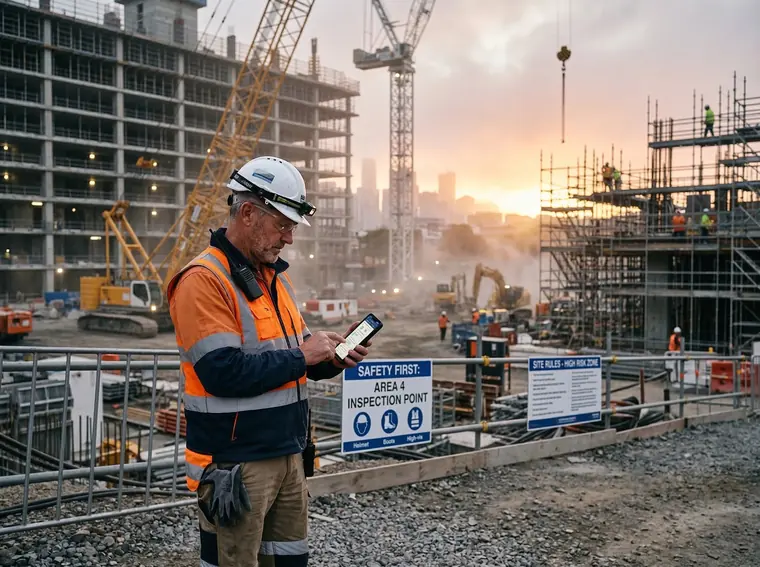
Unsafe condition reporting increased, and corrective actions stopped going overdue.
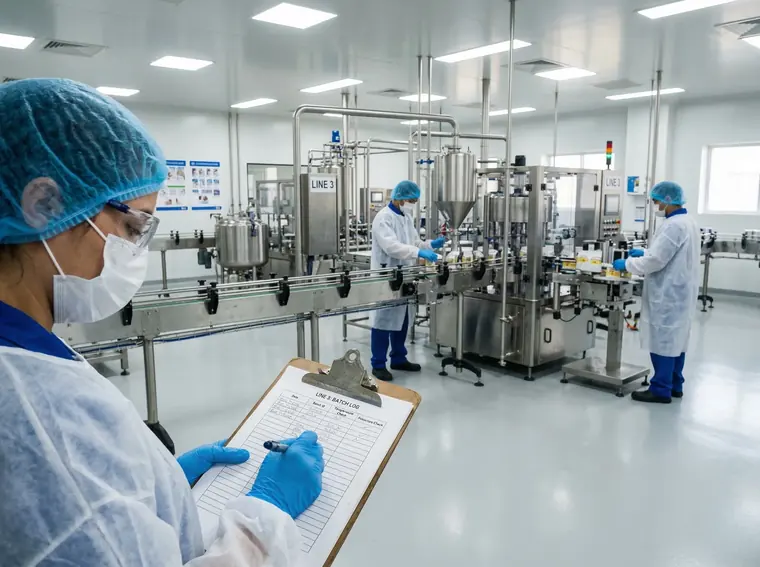
Investigation closure quality improved and audit action tracking effort dropped.
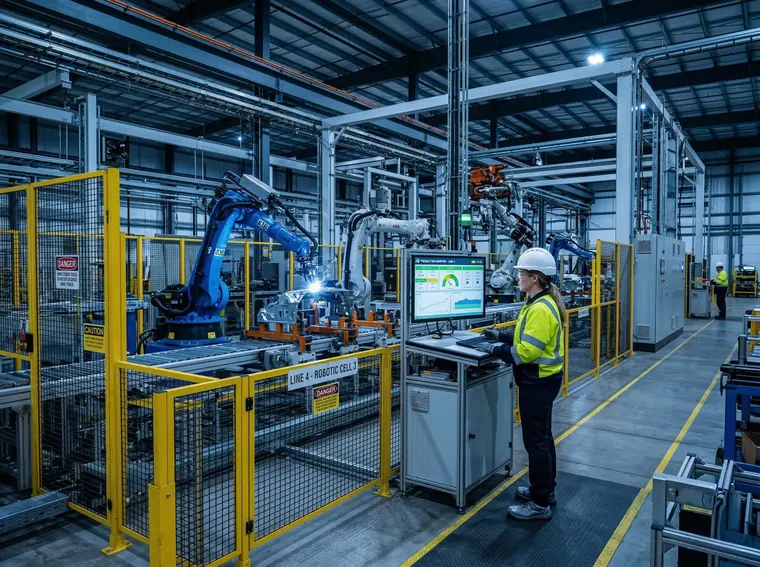
Near-miss reporting grew and repeat equipment-related incidents reduced.
Configured to match existing SOPs, not to replace the way teams already work.
Multi-stage approvals and validations converted into clean digital flows with reminders and escalations.
Workers and supervisors captured incidents, observations and evidence at the workforce, without admin overhead.
Role-based access, full audit trail, controlled PDF exports.
Mobile-first adoption for workers, a simple admin console for HSE, and quick training for supervisors.
The operating conditions these four stories have in common.
Multi-industry
Large workforce with high contractor dependency
High-risk operations and audit-heavy governance
Most teams ask these questions before rolling out OQSHA.
Typically 2–6 weeks, depending on the number of sites, the modules you enable (Permit to Work, Inspections, Safety Alerts, HIRA, Visitor Management), and how much historical data you're bringing over. Most customers start with a pilot site, then roll out site by site.
Nothing special. Field teams use the OQSHA mobile app on Android or iOS phones and tablets; admins and managers use the web portal in any modern browser.
Yes. OQSHA is built for sites where connectivity is patchy: basements, towers under construction, plant floors. Field users can raise permits, safety alerts and inspections with no signal, including photos and attachments. Everything syncs automatically once the device reconnects.
Data is encrypted in transit and at rest, hosted on AWS in your chosen region. For organizations that need full control, OQSHA can also be deployed on-premise within your own infrastructure.
No. OQO runs as a captive AI. It works on your safety data within the OQSHA environment and never sends it to a public model or the open internet.
Yes. We support Single Sign-On and integration with common HRIS, ERP, and directory systems. Custom integrations are scoped with our implementation team during onboarding.
Yes. Historical permits, inspections, and incident records can be imported during onboarding, usually alongside the pilot, so your analytics and audit history are complete from day one.
Yes. Each organization runs in its own isolated tenant. Your templates, records, users, and dashboards are never visible to or shared with any other customer.
Built-in dashboards across permits, incidents, and inspections, filterable by site, zone, and time period. They're scoped automatically to what each user is allowed to see.
A named implementation contact through rollout, then standard support with response-time SLAs based on your plan. App updates are delivered over the air, so field users always have the latest version without reinstalling.
SAFER OPERATIONS START WITH A CONVERSATION
Your workflows. Your sites. A tailored OQSHA walkthrough.